How to Use Google Keyword Planner to Find Low-Competition Ranking Keywords
A complete guide on how SEO specialists uncover profitable search queries, calculate commercial intent, and climb to position 1 on Google.
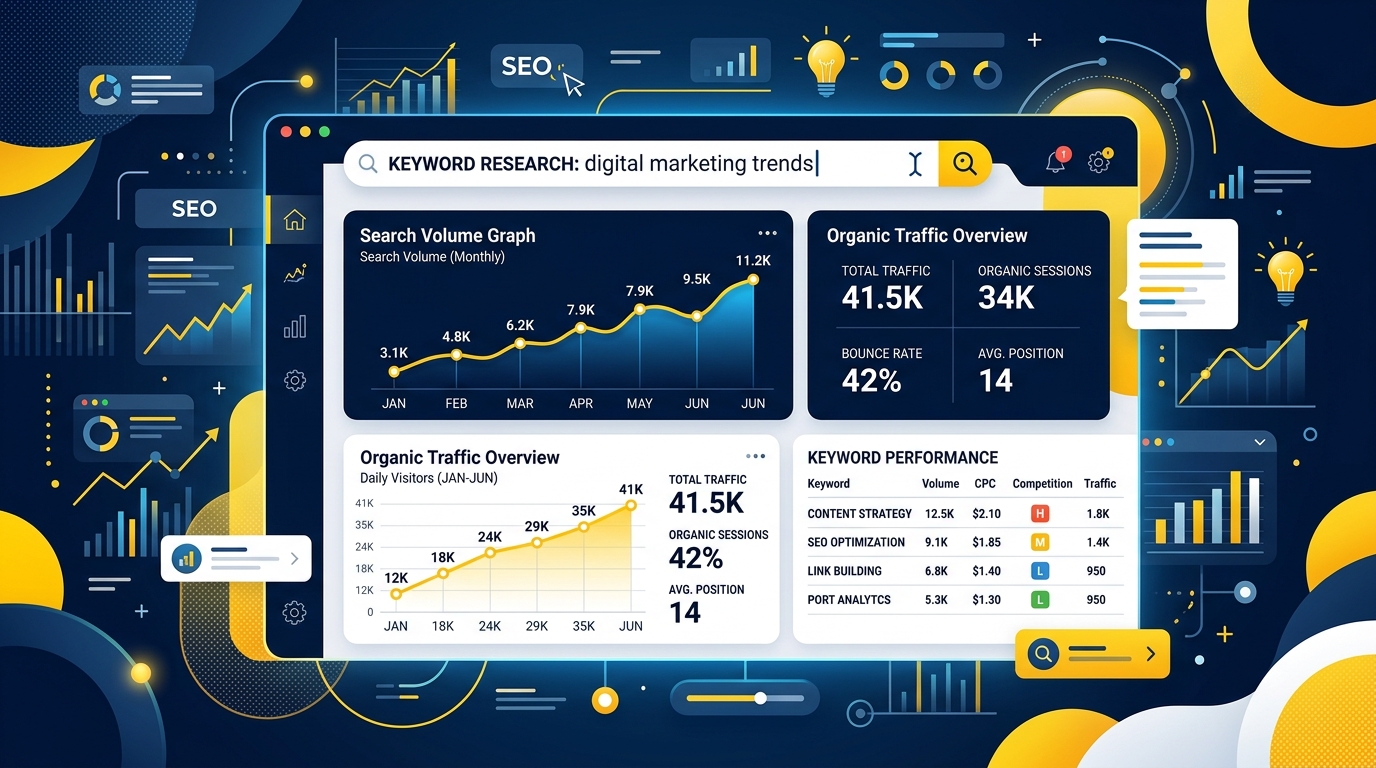
Direct Definition & Core Concept
Popular Keyword Searches & Topics for Google Keyword Planner
Click any search topic below to immediately run real-time autocomplete predictions, monthly search volume, and SERP competition in the Google Keyword Planner:
Real Keyword Research Examples for B2B & E-commerce
Notice how adding intent modifiers narrows competition and clarifies user expectations:
| Keyword Seed | Intent Type | Avg. Monthly Volume | Competition |
|---|---|---|---|
| seo audit tool | Commercial | 18,200 | High |
| free technical seo audit checklist for developers | Informational | 2,400 | Low |
| how to fix duplicate canonical tags in shopify | Informational | 1,600 | Low |
Step-by-Step Method
Follow this practical workflow to achieve measurable organic results in minutes.
Enter Seed Keywords in Search Console
Type your primary niche or product topic (e.g. "sustainable coffee beans", "b2b invoicing software") into the search console.
Filter Suggestions by Search Intent
Review the autocomplete queries. Filter by Questions ("how to", "what is"), Prepositions ("for", "with"), or Commercial modifiers ("best", "review", "pricing").
Analyze Monthly Search Volume & Cost per Click
Check the estimated monthly search volume and CPC benchmarks to understand advertiser demand and conversion profitability.
Export Structured Data to CSV
Click Export CSV to save your structured keyword cluster directly into your editorial calendar.
Common Mistakes
Avoid these high-friction errors that derail indexation and organic rank momentum.
Core Ranking Factors & Metrics
Search engines weight these specific attributes when computing SERP visibility.
Detailed Strategy & Technical Nuance
Why Google Autocomplete Is the Strongest Intent Signal
Google autocomplete queries reflect real searches performed by millions of users daily. Unlike static keyword databases updated once per month, live autocomplete captures emerging consumer vocabulary and seasonal trends.
When you optimize content around these exact query stems, you match the semantic language Google algorithms prioritize.
Translating Keyword Data into High-Performing Content
Begin by mapping each keyword to a specific user goal. Informational terms belong in comprehensive how-to articles and guides, while commercial queries are best answered by comparison matrices and review summaries.
Never force an exact keyword into a sentence if it sounds awkward or grammatically incorrect.
Focus on satisfying the entire topic so the reader does not need to return to Google search results.
Google Keyword Planner
Access live Google autocomplete queries, estimated volumes, and CPC benchmarks instantly with zero login required.
Why use this: Directly search real-time Google autocomplete queries, estimated volumes, and CPC benchmarks.
Frequently Asked Questions
Direct answers to common search questions regarding Google Keyword Planner and Keyword Research.
How does Google Keyword Planner calculate monthly search volume?
Search volumes represent rolling 12-month average monthly estimates calculated from Google search trends data.
What is a good keyword difficulty score for a new website?
New websites should focus on keywords with a competition score below 35 and 4+ words in length.
Can I use Google Keyword Planner without creating a Google Ads account?
Yes. On searchkeyword.pro, you can access live Google autocomplete search data directly without logging into Google Ads.